One of the most important yet often misunderstood concepts in Dark Souls is the Cycle of Fire. It is not just a background lore detail, but the foundation upon which the entire world, story, and player experience are built. Understanding the meaning of the Cycle of Fire reveals why Dark Souls feels so tragic, philosophical, and unforgettable. At its core, the Cycle of Fire represents the struggle between light and dark, order and decay, and most importantly, the fear of change.
The Age of Fire and the Birth of the Cycle
The Cycle of Fire begins with the Age of Fire, when Gwyn, Lord of Sunlight, and the other Lords rose to power after discovering the First Flame. This flame brought disparity into the world: light and dark, life and death, heat and cold. Fire symbolized civilization, gods, and order. As long as the flame burned, the gods ruled, and the world remained stable—at least on the surface.
However, fire is not eternal. As the First Flame began to fade, so too did Gwyn’s power and the Age of Fire itself. Rather than accepting the natural transition into the Age of Dark, Gwyn chose to link the flame, sacrificing himself to artificially prolong the fire. This single act created the Cycle of Fire.
Linking the Flame: Fear of the Dark
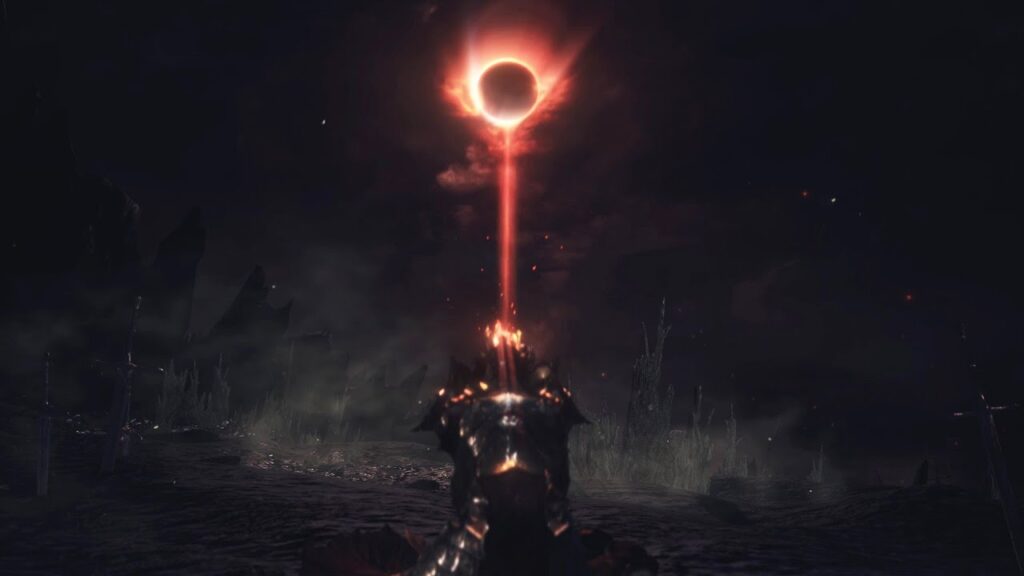
Linking the flame is presented as a heroic act, but Dark Souls slowly reveals its deeper implications. By rekindling the fire, Gwyn postponed the Age of Dark, denying the world its natural evolution. The Cycle of Fire is therefore driven by fear—fear of darkness, fear of humanity, and fear of losing control. The gods see darkness not as balance, but as a threat. Yet the game suggests that darkness is not inherently evil; it is simply another state of existence. This cycle repeats endlessly: the flame fades, a chosen undead rises, and the fire is either linked again or allowed to die.
The Curse of the Undead
The Undead Curse is a direct consequence of the Cycle of Fire. As the flame weakens, humans—beings born of the Dark—begin to hollow. They lose purpose, identity, and memory. Hollowing represents what happens when a world clings to an unnatural order for too long. The cycle keeps repeating, but each repetition leaves the world more broken than before. This is why Lordran feels decayed, empty, and hopeless. It is a world stuck in stagnation, unable to move forward.
The Player’s Role in the Cycle
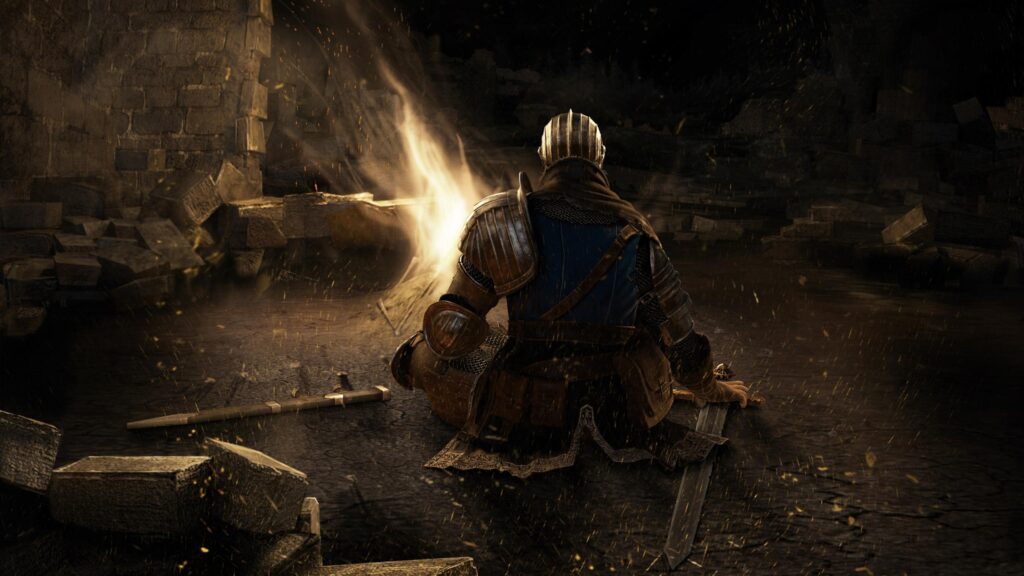
The player character is not a savior in the traditional sense. Instead, the player is a decision-maker in an ancient system that predates them. Throughout the game, players are subtly pushed toward linking the flame, presented as the “right” choice.
However, Dark Souls never clearly states which ending is correct.
- Linking the flame continues the Age of Fire
- Letting the flame fade allows the Age of Dark
Neither option is portrayed as purely good or evil. The ambiguity forces players to confront the consequences of choice rather than chase a clear victory.
Fire as a Metaphor
Beyond lore, the Cycle of Fire functions as a metaphor for real-world themes:
- Fear of change: Holding onto the familiar, even when it causes harm
- Power structures: Those in power resisting inevitable decline
- Repetition and stagnation: Cycles that repeat without progress
The constant resurrection of the player mirrors the cycle itself—death, rebirth, repetition. Every failure and retry reinforces the theme that existence in Dark Souls is cyclical.
Why the Cycle of Fire Is So Powerful
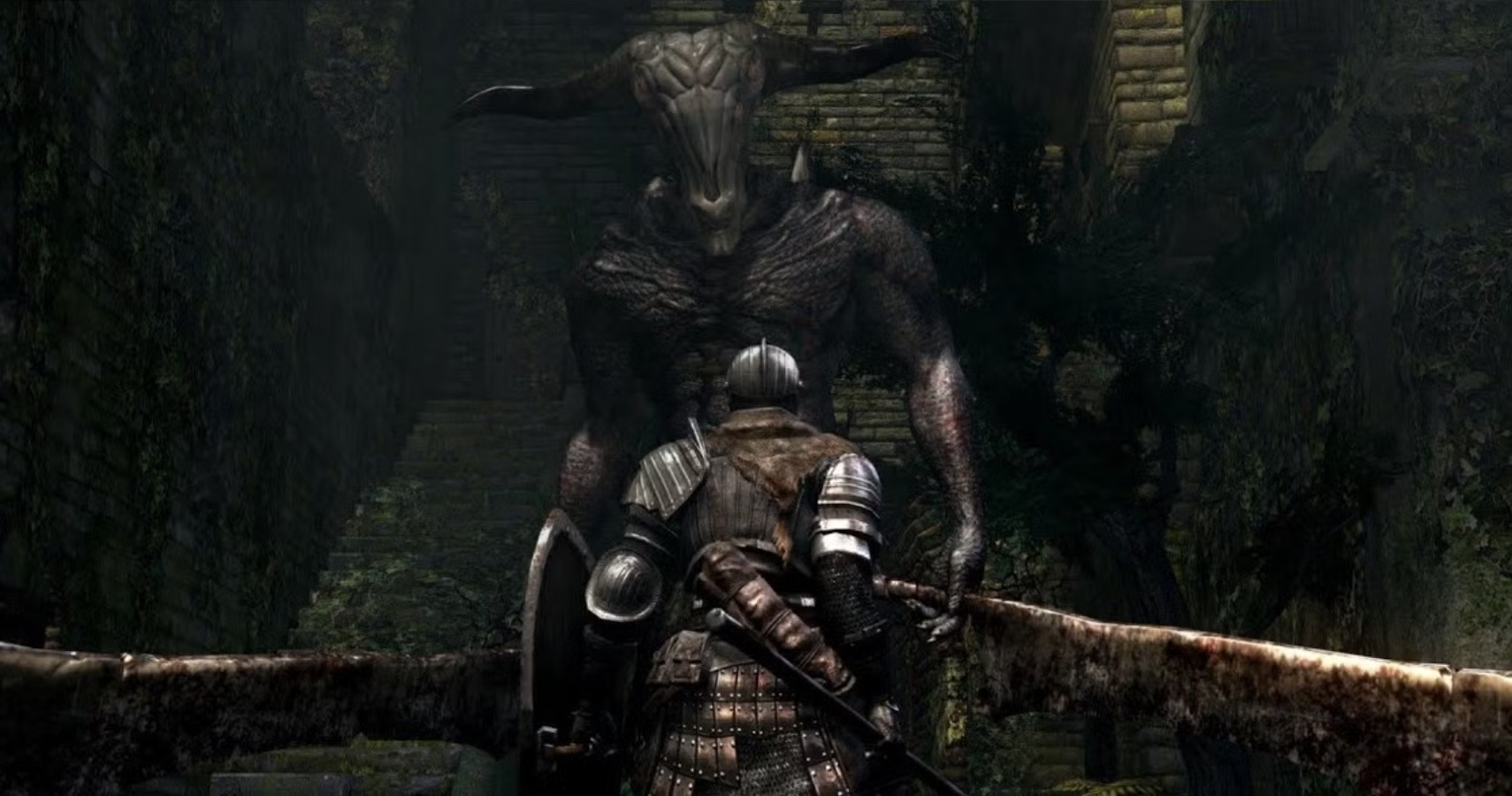
The brilliance of the Cycle of Fire lies in how it blends gameplay and narrative. Bonfires, resurrection, New Game Plus—everything reinforces the idea that the world is trapped in repetition. Unlike games that offer clear moral answers, Dark Souls asks players to reflect. Is preserving the flame an act of hope, or an act of denial? Is darkness an ending, or a new beginning? These unanswered questions are what give the series its lasting emotional weight.
Final Thoughts
The Cycle of Fire in Dark Souls represents the fear of letting go, the cost of resisting change, and the tragic consequences of clinging to a fading world. It is not a simple battle between good and evil, but a meditation on existence, decay, and choice. By placing the player at the center of this cycle, Dark Souls transforms lore into a deeply personal experience.
👉 If the philosophy and world of Dark Souls left a lasting impact on you, explore Dark Souls–inspired merchandise, collectibles, and apparel at: darksoulsgifts.com. Carry the legacy of fire, darkness, and hard-earned perseverance beyond the game and into the real world.
